Urban Myth or A True Reality?
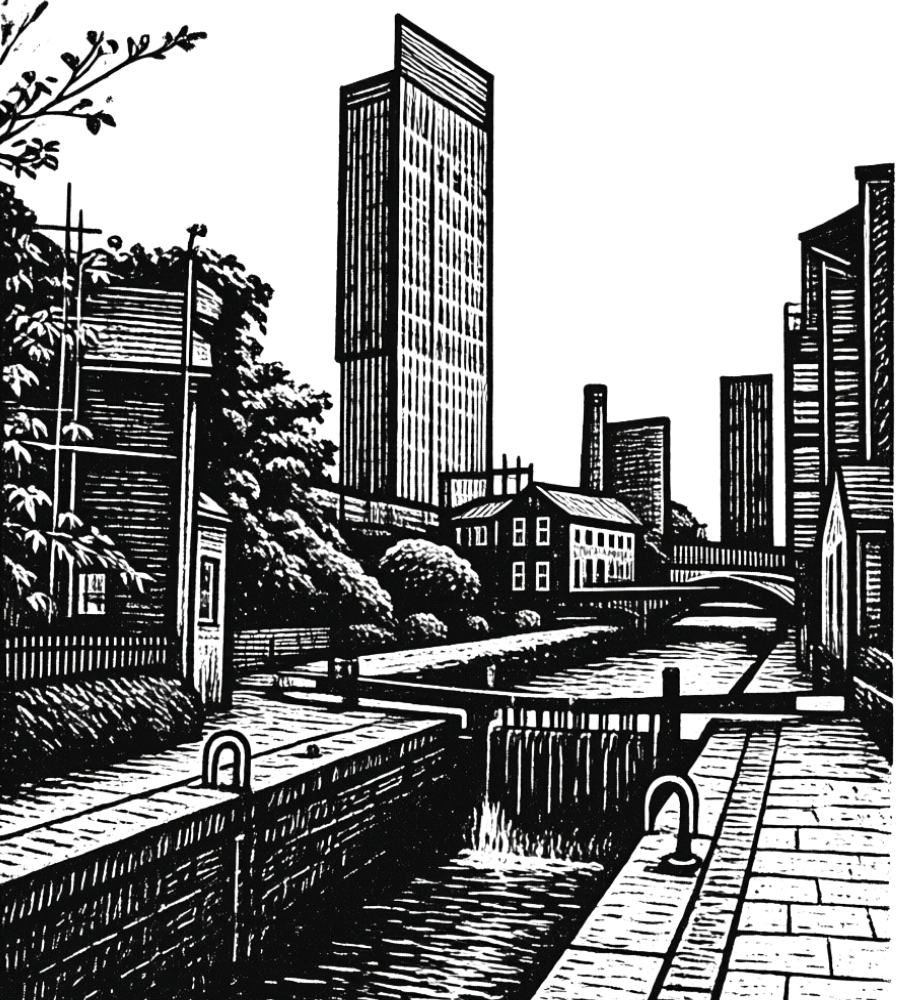
If you walk along Manchester’s picturesque canal towpaths late at night, you might notice a sudden drop in light, the steepness of the slippery cobbled banks, and the shadowy silence of the water. You might also recall a whisper that has circulated throughout the city for over a decade: The Manchester Pusher.
The story goes that a phantom serial killer is stalking the city’s vast canal network, targeting vulnerable, intoxicated young men on nights out and shoving them into the freezing water to drown.
It is one of the UK’s most infamous modern urban legends. But where did this terrifying theory come from? Is there a killer on the loose, or is the reality a tragic combination of alcohol, dangerous geography, and human psychology?
How the Rumour Began
The “Pusher” narrative took off around 2015 following a series of tabloid news reports and a Freedom of Information (FOI) request. The data revealed that over 85 bodies had been recovered from waterways across Greater Manchester between 2008 and 2016 alone.
Because a noticeable number of the victims were young men who went missing after nights out near the city centre, particularly around Canal Street, the Rochdale Canal, and the Bridgewater Canal, speculation exploded online.
The story hit the national mainstream in 2016 with the Channel 4 documentary The Pusher: Manchester’s Serial Killer? The feature gave a platform to grieving families who openly questioned official police findings, arguing that the sheer number of deaths couldn’t possibly be a coincidence.
Raw Data: What the Numbers Actually Show
Because the “Manchester Pusher” is an urban legend rather than an officially recognised crime spree, there is no single case file. Instead, proponents of the theory rely on drowning data. Looking closely at the statistics reveals important context:
The Core Figure (85+ Deaths): Between 2008 and 2016, 85 to 86 bodies were pulled from Greater Manchester’s waterways. However, over 60 of those deaths took place across the broader county, an area spanning nearly 500 square miles, including towns like Wigan, Rochdale, and Bolton, rather than a single stretch of canal in the city centre.
The Demographics (72 Men): Out of the 85+ total deaths, 72 were male. This skew toward young men walking home alone at night forms the backbone of the “Pusher” narrative.
Inquest Verdicts (44 Accidents vs. 28 Open Verdicts): Re-examinations by coroners resolved 44 of the 72 male drownings as clear accidents or suicides. However, 28 ended in “open verdicts,” meaning there wasn’t enough surviving physical evidence to conclusively establish how the person entered the water. While theorists treat these open cases as potential murder victims, pathologists emphasize that water naturally degrades forensic evidence.
Confirmed Serial Attacks (0): To date, police have recorded zero murders linked to a canal pusher.
Unresolved Cases That Fuel the Speculation
While authorities maintain there is no evidence of a serial killer, several high-profile older cases remain deeply unsettling to families due to missing belongings, unexplained injuries, or eerie final moments:
Male aged 38, 2007: When a male’s body was recovered from the Ashton Canal, pathologists noted unexplained cuts and bruises to his head, leaving the exact events leading up to his drowning unexplained.
Male aged 21, 2010: A male vanished after a Christmas night out and was recovered two months later from the River Irwell. His coat, phone, passport, and wallet were all missing. Although CCTV captured a figure running toward the water, the man’s family publicly doubted the person in the video was actually him.
Male aged 21, 2012: A male vanished after attending an event in Trafford Park. Shortly before he drowned in the Manchester Ship Canal, the man called his parents, who recalled hearing “ghastly screaming and howling” in the background before the call cut off.
Male aged 18, 2012: A male was ejected from a nightclub in Trafford Park on New Year’s Eve. His body was found three weeks later in the Bridgewater Canal. CCTV footage showed the male walking along the canal towpath alongside an unidentified mystery man who was never traced.
Recent Reports: Why the Rumour Won’t Die
The legend hasn’t stayed in the past. Ongoing incidents over recent years continue to add fuel to the fire whenever a new headline breaks:
The 2018 Bridgewater Canal Attack
In April 2018, a 34-year-old cyclist was riding along the Bridgewater Canal near Old Trafford late at night when an unknown assailant violently shoved him into the canal. As the cyclist struggled in the water with his legs tangled in his bike, the attacker actively kicked his hands to prevent him from climbing back onto the bank. The victim survived and told police he felt lucky to be alive, but officers treated the assault as an isolated altercation rather than proof of an attempted attack by a serial killer.
Ongoing Drownings in the 2020s
The sheer frequency of water-related fatalities in Greater Manchester keeps the narrative alive in local gossip. Between 2017 and 2022 alone, dozens of people drowned across Greater Manchester’s waterways, including a record high of 15 deaths in 2021. High-profile incidents, such as bodies pulled from the canal near Castlefield Bowl, regularly trigger fresh waves of speculation on social media.
Why Do Some Cases Remain Open?
Why haven’t these cases been closed with absolute certainty? Forensic experts point out that drowning investigations in urban waterways face immense technical challenges:
Forensic Degradation: Prolonged immersion in water destroys delicate physical evidence. Defensive injuries, fingerprints, or touch DNA can easily be washed away or obscured by natural decomposition.
Coroner Verdicts: When evidence is inconclusive, coroners often issue an open verdict. This doesn’t mean murder occurred; it simply means there is not enough proof to definitively declare it an accident, suicide, or foul play.
The Official Verdict: Misadventure & Confirmation Bias
Greater Manchester Police (GMP), local councils, and independent criminologists have repeatedly investigated the claims and categorically denied the existence of a serial killer. Their stance is backed by several crucial factors:
The Geography & Nightlife: Manchester has a massive, thriving nightlife scene situated right next to historic, un-railed, steep-sided canal banks. Intoxicated individuals walking home in the dark face an extraordinarily high risk of accidental trips and slips.
Statistically Typical Numbers: The 85+ deaths frequently quoted cover a massive geographical area of nearly 500 square miles over two decades, not a single stretch of water in the city centre. Statistically, cities with extensive water networks see similar accident rates.
No Forensic Pattern: Detailed reviews of CCTV, forensic reports, and timeline cross-referencing showed no common pattern, shared modus operandi, or evidence of a single stalker operating along the towpaths.
What the Experts Say: Criminologists generally view the Manchester Pusher as a classic case of confirmation bias. When faced with shocking, random tragedies, human nature seeks patterns and villains. It is often easier for a community to process the idea of a single evil monster than to accept that young, healthy people can lose their lives to simple, tragic accidents.
The Real-World Impact: Safer Towpaths
Whether driven by public anxiety or practical necessity, the legacy of the “Pusher” legend has led to tangible safety improvements. Manchester City Council and Greater Manchester Police have invested heavily in practical prevention, including:
Installing extra fencing, barriers, and rescue equipment along high-risk stretches. Improving street lighting along popular towpaths. Launching targeted safety campaigns directed at late-night partygoers.
While the myth of the Manchester Pusher may never fully disappear from local folklore, the reality remains a grim reminder of how dangerous dark waterways can be, and how easily an urban myth can take root in the shadows when some accidents occur.
* Please note that some names have remained anonymous to respect the families involved.



Leave a Reply