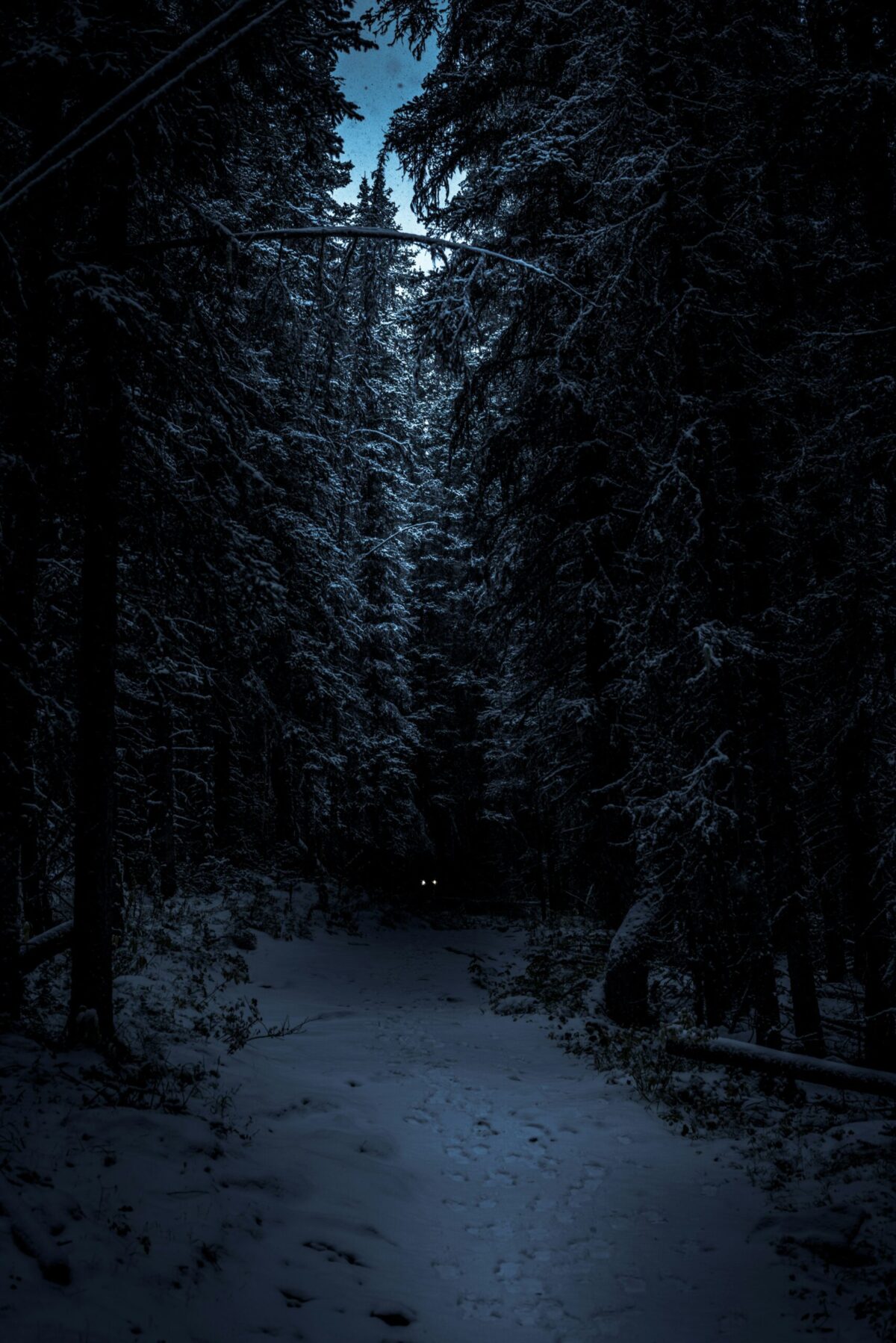
The Legend of the Salford Bigfoot
When you think of Bigfoot, your mind probably pictures the vast, ancient pine forests of the American Pacific Northwest or the remote, misty peaks of the Himalayas. You almost certainly do not picture an urban public park right off the busy A57 in Greater Manchester.
Yet, Salford holds one of the UK’s strangest and most enduring cryptid legends: The Salford Bigfoot.
The Encounter That Started It All
The core of the legend traces back to a specific afternoon in May 1982 in Buile Hill Park, an 86-acre green space featuring overgrown historic gardens and a derelict Georgian mansion.
Deborah Hatswell, then a 15-year-old schoolgirl, was hanging out in the park with a friend, bunking off class to avoid teachers and park rangers. They took shelter inside a dense thicket of ivy and rhododendron bushes, a secluded spot locals called the “ivy den”.
What was meant to be a quiet afternoon turned terrifying. Hatswell caught a sudden movement in her peripheral vision and made direct eye contact with a creature lurking in the vegetation.
The creature leaned out from the foliage just feet away:
The Build: Seen from mid-chest up, it had remarkably broad, heavily muscular shoulders. It stood at an estimated height well over six feet.
Facial Features: It possessed a wide, ape-like jaw with thick, protruding masseter muscles. Unlike an animal, its teeth were flat and human-like with no pronounced canines. Its face had leathery, weather-beaten skin with light, sparse chin hair, giving it a distinctly “Neanderthal” appearance.
The Flight: Panic set in instantly. Hatswell shoved her friend out of the way, and the two teenagers fled the park as fast as they could, never stopping until they reached safety.
When Hatswell attempted to report what she had seen, her story was met with heavy skepticism, ridicule, and dismissive laughter from adults and paranormal organisations. Traumatised by her encounter, she avoided returning to Buile Hill Park until her thirties.
Years later, while browsing online, she stumbled across a police composite sketch of an American cryptid that matched the face she had seen in 1982. The realisation spurred her to found British Bigfoot Research (BBR), an organisation dedicated to collecting and archiving witness testimonies of anomalous creatures across the UK so that eyewitnesses wouldn’t have to face the same isolation, ridicule and embarrassment that she had experienced.
Is It Just Salford or Are There Further Sightings?
While an urban park bordered by residential streets seems like the least likely place for a wild ape to survive, local cryptid investigators note that reports in Buile Hill Park actually span from the 1960s to as recently as 2017. Furthermore, the broader North West of England contains several recognised hotspots where similar encounters have been documented:
Winter Hill & The West Pennine Moors (15 miles north of Salford): The rugged terrain, thick woodlands, and abandoned stone quarries around Winter Hill are heavily tied to local lore. Investigators have logged multiple reports of tall, bipedal figures, strange guttural calls, and unnatural structural “tree bends” in the dense pockets of timber surrounding the moorland.
The Forest of Bowland (40 miles north of Salford): Deep within rural Lancashire, this area of outstanding natural beauty has produced field reports detailing large, dark, upright figures watching hikers from riverbanks, alongside strange, woven stick-and-branch shelters (“wood structures”) that appear too heavy to have been assembled by humans.
The Pennine Valleys: Following the geographic spine of northern England, the old industrial valleys and woodland fringes across Lancashire and Yorkshire contain dozens of archived historical claims involving hairy humanoid figures moving between rural pockets under cover of darkness.
Fact, Fiction, or High Strangeness?
How could a creature matching this description exist in such a densely populated region of England? Skeptics and researchers generally break down the phenomenon into three primary explanations:
Misidentification & Pranks: The most conventional explanation suggests witnesses are seeing tall, heavily built individuals wearing bulky winter coats or fur-lined parkas in low-light conditions. Others suggest historical escapees from private collections or traveling menageries, though no formal records of escaped primates exist in Salford municipal archives.
Psychological & Memory Effects: Skeptics point out that fear and sudden shock in dark, dense vegetation can cause the human mind to project exaggerated, monstrous traits onto a normal human passerby or a large dog.
Paranormal & “High Strangeness” Theories: Because maintaining a breeding population of 7-to-8-foot biological primates in fragmented UK parks is reported as ecologically impossible, a vocal segment of cryptid researchers views the phenomenon through a paranormal lens. They hypothesise these entities may represent transient, non-physical, or interdimensional events, often pointing to the fact that UK Bigfoot sightings frequently overlap geographically with reports of floating orange light orbs and UFO activity.
Whether viewed as a misidentified passerby, a psychological trick of light and shadow, or a genuinely unexplained phenomenon, the “Salford Bigfoot” remains one of the most compelling and detailed pieces of modern bigfoot sightings in northern England.
Huge admiration has to be aimed at Deborah Hatswell for having reported her experience in the first instance, but also for now supporting others across the UK and wider when they find themselves in the position of experiencing a Bigfoot encounter and are unsure of where to turn for advice, guidance and answers.
Leave a Reply