The Mystery of the Shadow of Swain’s Lane
In the early months of 1970, an overgrown Victorian cemetery in North London became the backdrop for one of the most remarkable social panics in modern British history. Highgate Cemetery, long fallen into eerie neglect, suddenly transformed into the centre of a media firestorm, a battleground for rival occultists, and the scene of an infamous mass vampire hunt. What began as scattered letters to a local newspaper soon spiralled into a bizarre confluence of gothic gossip, sensational press coverage, and mass hysteria.
Entity in the Overgrowth
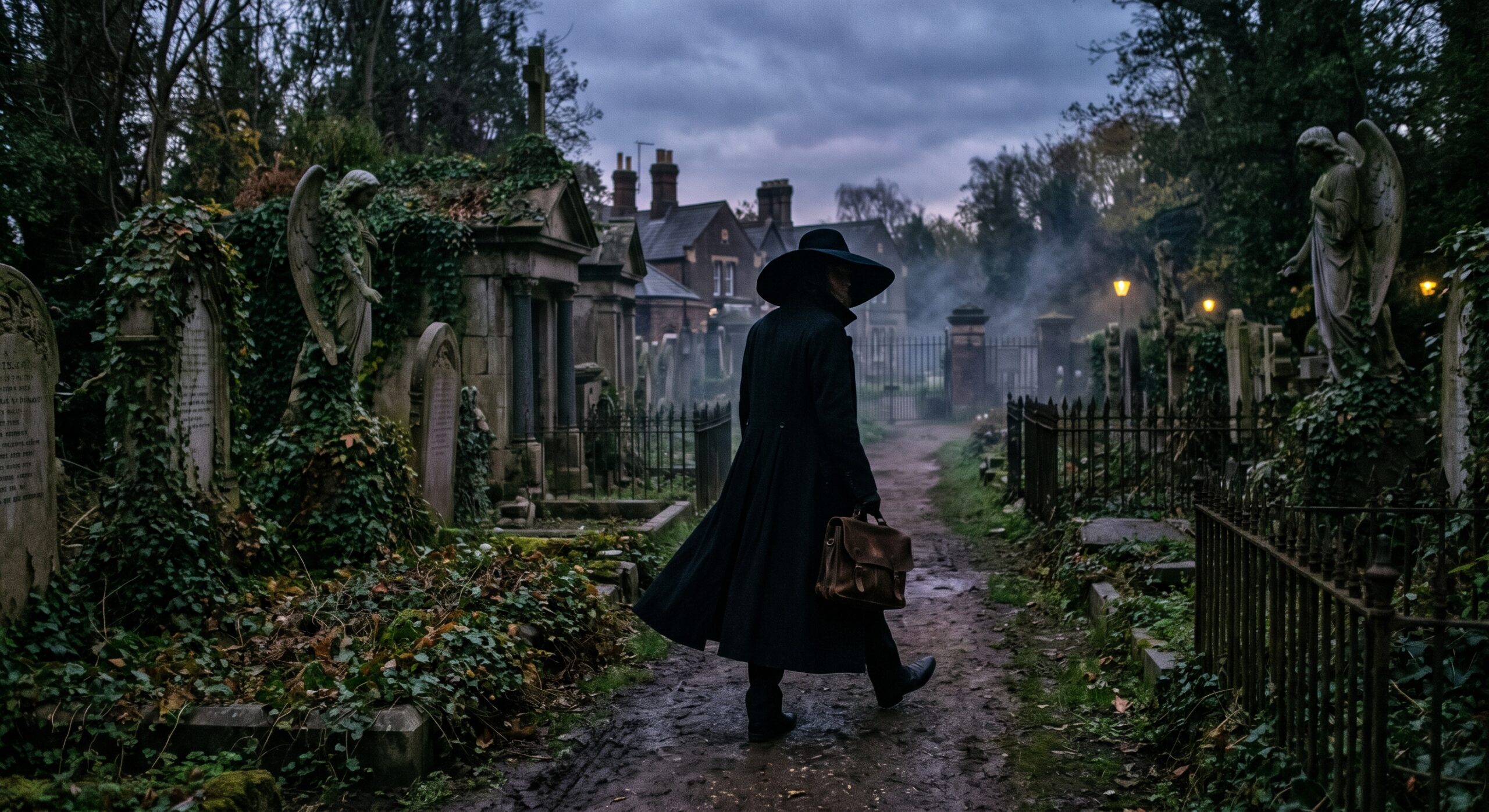
By the late 1960s, Highgate Cemetery was a shadow of its former Victorian grandeur. Flanked by Swain’s Lane, the ground was choked with dense ivy, collapsing mausoleums, and vandalised family vaults. It was an atmospheric setting that naturally invited eerie speculation, but in late 1969, rumours took an unexpected detour.
The Hampstead and Highgate Express began receiving a trickle of letters from local residents describing disturbing late-night experiences around the cemetery perimeter. These reports created a dark, composite picture of an elusive, shadowy entity haunting North London.
The Eyewitness Accounts
Unlike classic horror fiction, the eyewitness reports from Swain’s Lane and Highgate Cemetery varied wildly, ranging from spectral apparitions to physical attacks:
The Tall Dark Figure: The vast majority of sightings described a tall, dark, elongated silhouette standing between six and seven feet tall. Witnesses reported seeing a figure wearing a long dark cape and a Victorian top hat, moving smoothly above the pavement without making a sound, even when gliding over dry leaves or gravel. The most terrifying detail was always the eyes, described as glowing yellow or burning red pits piercing through the darkness.
Physical Sensations and Psychic Paralysis: Passersby reported strange physical symptoms along the high walls of Swain’s Lane. Multiple people claimed to step into sudden, localized “pockets of icy cold” air. Others reported being struck by overwhelming nausea, dizziness, or a sudden, frightening inability to move, describing a feeling as if their physical vitality was being rapidly drained.
The Dog Walker’s Encounter (1965): In a report that circulated heavily in paranormal circles, a local resident was walking his dog near the western gate at night. He claimed to see a dark, liquid-like substance ooze down the cemetery wall before coalescing into a tall, faceless masculine shape with two glowing red pits where its eyes should have been. His dog growled and fled in panic.
The Convent Schoolgirls (1967): One of the earliest sightings that further fuelled local rumours involved two teenage girls walking home past the cemetery’s North Gate. They claimed to have witnessed graves opening and human figures literally rising from the dead inside the grounds.
Lusia and the Nocturnal Attacks (1969–1970): Vampire researcher Sean Manchester brought forward accounts from a young local woman referred to as “Lusia” or “Luan.” She suffered from terrifying nightmares of a cadaverous, malevolent figure trying to force its way through her bedroom window. Over time, she began sleepwalking, grew pale, and suffered from severe anaemia. Manchester claimed to have personally found two distinct puncture-like marks on her neck, pointing to them as direct evidence of vampire attacks.
Mutilated Animals: Throughout late 1969 and early 1970, dead foxes, birds, and domestic pets were discovered in neighbouring Waterlow Park and inside the cemetery grounds. Local residents reported finding carcasses with torn throats and a distinct lack of blood, fuelling fears that a blood-drinking monster was feeding in the neighbourhood.
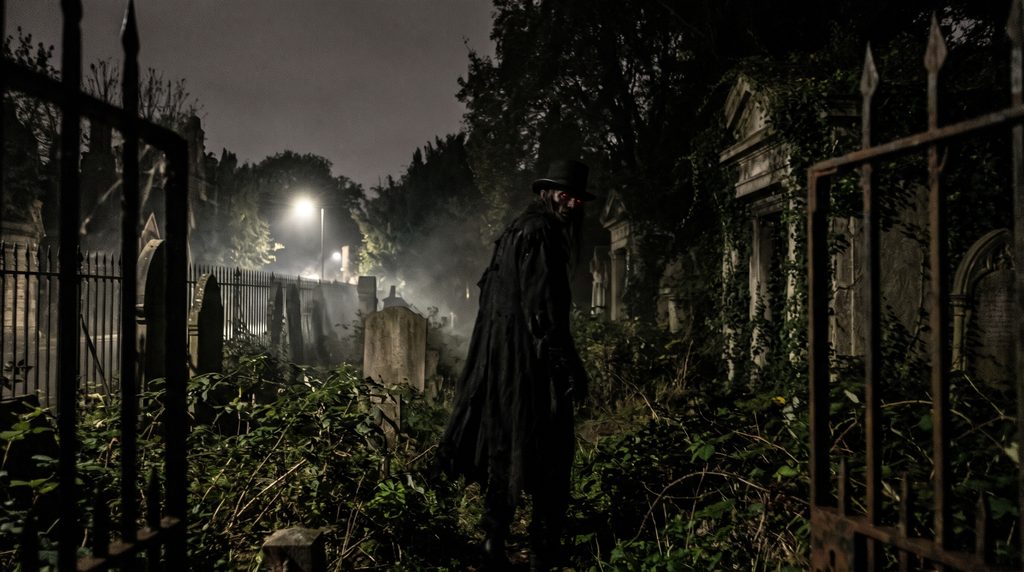
The Duel of the Occultists
As local curiosity turned to fear, two self-styled paranormal figures stepped into the public spotlight, giving the phantom a name and sparking a bitter feud that would span decades. David Farrant, president of the British Occult Society, reported seeing a tall dark figure inside the cemetery gates in December 1969. Farrant maintained a relatively restrained interpretation, arguing that the entity was an earth-bound spirit, a ley-line anomaly, or a ghostly shadow rather than a physical bloodsucker.
Sean Manchester, a self-proclaimed exorcist and vampire hunter, pushed a far more sensational narrative. Manchester claimed that the entity was an actual undead monster, a “Wallachian nobleman” and medieval practitioner of black magic brought to London in a coffin during the 18th century, newly awakened by modern satanists.
Friday the 13th: The Great Vampire Hunt
The escalating rhetoric reached a boiling point on Friday, March 13, 1970. During a televised ITV interview, Manchester publicly announced his intention to enter Highgate Cemetery that evening to perform an official exorcism and destroy the vampire once and for all.
The television broadcast acted as a magnet. Despite official police warnings and locked iron gates, thousands of people, including curious locals, teenagers, journalists, and self-styled vampire hunters, descended on Swain’s Lane. A mob carrying wooden stakes, crucifixes, garlic, and flashlights also swarmed the area and scaled the cemetery walls.
Police officers spent hours clearing the grounds and restoring order. While no vampire was discovered, the event permanently altered the local landscape. In the weeks and months that followed, trespassers continued to target the vaults, leading to severe grave desecration. In one notorious case, a decapitated corpse was discovered near the cemetery grounds, prompting police arrests under historical witchcraft and grave-tampering laws.
The Hysteria and the Aftermath
The Great Vampire Hunt marked the peak of the public frenzy, but its cultural echoes persisted for decades. Highgate Cemetery’s reputation as a haunted landmark was firmly etched into modern history, inspiring horror literature and iconic Hammer Horror movies like A.D. 1972.
For Farrant and Manchester, the event marked the beginning of a lifelong feud. The two spent the next several decades locked in public disputes, publishing books, filing court cases, and accusing each other of hoaxes and sensationalism.
Skeptics and historians offer far more grounded explanations for the sightings. The crumbling Victorian tombs, thick ivy, and gas-lit streets created visual tricks and stark shadows, while Swain’s Lane acted as a natural wind tunnel capable of creating sudden temperature drops and strange acoustic noises.
Combining these with intense press reporting and normal nighttime anxieties, they were quickly re-interpreted through the lens of a supernatural monster, making the Highgate Vampire a textbook example of ostension, a phenomenon where urban rumour and media hype feed each other until an urban myth is eventually created.
However, whether viewed as a genuinely inexplicable encounter with the unknown, a masterclass in media manipulation, or something far darker still haunting those ivy-choked paths, the true nature of whatever stirred behind the gates of Highgate Cemetery remains unsettled, silently waiting in the cold shadows for those daring enough to investigate further, allowing the Highgate Vampire to resurface once again.
Leave a Reply