Tag: Strange

The Night the Devil Walked

Devon’s Impossible Footprints

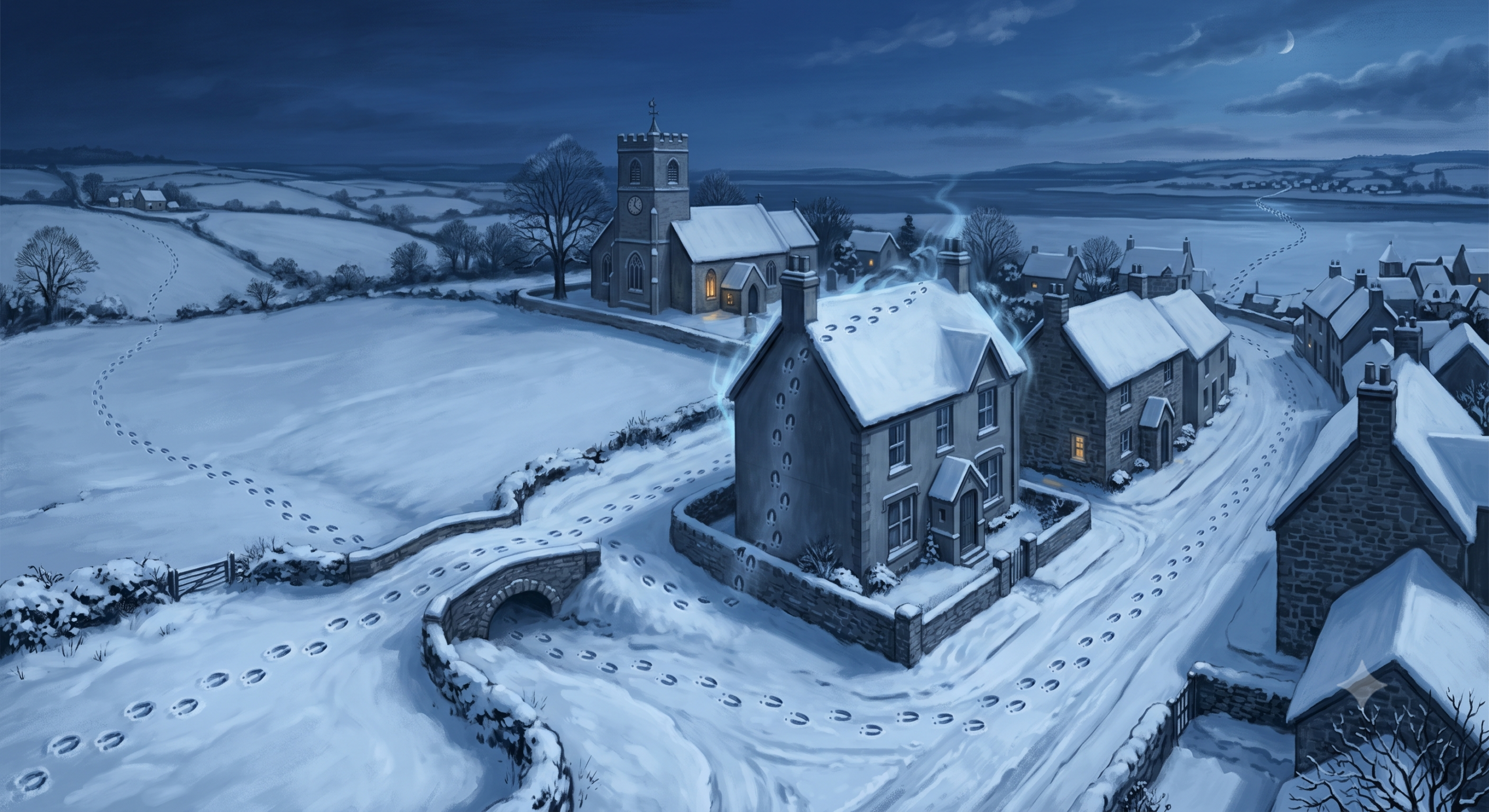
On the morning of February 9, 1855, residents across East and South Devon, England, stepped out of their homes into a quiet winter landscape. A heavy snowfall had blanketed the region overnight, covering roughly 30 separate towns and hamlets—including Exmouth, Dawlish, Teignmouth, and Topsham. But as the townspeople began clearing their walkways, they noticed something deeply eerie.

Stretching through the fresh powder was a single, continuous line of mysterious hoof-like impressions. The discovery sent shockwaves through Victorian Britain. Locals quickly dubbed the phenomenon “The Devil’s Footprints,” convinced that Satan himself had prowled through their villages while they slept. But what actually happened on that freezing winter night, and why does this mystery continue to intrigue historians over a century later?

What Made the Tracks So Bizarre?

Footprints in fresh snow are hardly extraordinary, but the characteristics of the Devon tracks defied conventional logic. First was the sheer scale of the phenomenon. Estimates of the trail’s total length ranged from 40 to over 100 miles, all laid down in a single six-hour window. For a single ground animal to cover that distance in one night seemed physically impossible.

Second was the gait. Rather than alternating left and right like a normal four-legged creature, the prints formed an unbroken, razor-straight line. It appeared as though the entity walked on two legs with uncanny precision or placed each step directly in front of the last.

Most unsettling of all was how the trail interacted with obstacles. The tracks did not wind around barriers—they went over them. Prints were discovered on top of high walls, snow-covered roofs, haystacks, and inside locked gardens. In some accounts, the trail stopped at one side of a solid wall or haystack and resumed cleanly on the other side without disturbing the surrounding snow. Two witnesses even reported tracks leading directly into a four-inch drainpipe and emerging out the opposite end.

The Primary Evidence

Much of what we know today comes from Reverend H.T. Ellacombe, the vicar of Clyst St George. An avid antiquarian and amateur scientist, Ellacombe recognized the historical significance of the event and systematically reached out to vicars, magistrates, and schoolmasters across Devon to record precise measurements and sketches.

His collected correspondence revealed striking, consistent details across different villages:

Dimensions: Observers consistently measured the prints at roughly 4 inches long and 2.75 inches wide, spaced 8 to 16 inches apart.

Shape: Rather than rounded paws or split cloven hooves, the marks resembled those of a tiny donkey or an unshod horse, featuring a distinct, triangular inner structure similar to a frog.

The Exe Estuary Barrier: Perhaps the biggest physical puzzle in Ellacombe’s records was the River Exe. The trail appeared on both the eastern bank at Exmouth and the western bank at Dawlish. The river—over two miles wide in places—was not frozen that night. For one creature to make the entire journey, it would have had to cross miles of open, ice-cold water without altering its walking pace or track pattern.

Victorian Media and the “Satan” Panic

The timing of the event coincided with a period of heightened religious sentiment and intense public fascination with the supernatural.

During Sunday services following the snowfall, several local clergymen seized on the tracks from the pulpit, declaring them a literal warning from God that the Devil was wandering Devon in search of unrepentant sinners.

The panic went nationwide on February 24, 1855, when The Illustrated London News published a sensational feature on the phenomenon. Once national newspapers picked up the story, localized, independent reports were merged into a single narrative of a 100-mile Satanic walk. As word spread, copycats and local pranksters began creating their own tracks using warm brass irons, boots, or wooden stamps, further muddying the original evidence.

The Modern Consensus

For over a century, many theories were proposed. Naturalists suggested jumping wood mice, badgers, or otters searching for food. Others rumoured that kangaroos, monkeys, or swans had escaped from private menageries, while one popular theory claimed a weather balloon had broken loose from the Devonport Dockyard, dragging a heavy metal shackle across roofs and fields.

In the late 20th century, Fortean researcher Mike Dash conducted a comprehensive audit of all surviving 1855 letters and documents. He concluded that there was never a single creature or single 100-mile track. Instead, the Devil’s Footprints were the result of a natural “perfect storm”:

Multiple Independent Events: Overnight, various local animals—such as wood mice, badgers, and stray ponies—travelled across the fresh snow. Bounding animals like mice hop by placing their hind feet into the prints of their front feet, creating a single linear line of tracks.

Weather Distortion: A rapid freeze-thaw cycle overnight caused warm air and melting snow to expand small paw impressions into outer, horseshoe-like shapes. In some areas, loose ropes or debris dragged by wind added to the erratic marks on roofs.

Media Aggregation: In the morning, panicked locals and sensationalized newspaper reports linked these separate, distorted tracks across 30 miles into one continuous “demonic” trail.

Ultimately, the Devil’s Footprints remains a masterclass in how environment, animal behavior, and human imagination collide. Science may provide a logical explanation, neatly attributing the phenomenon to distorted paw prints and freezing weather, but logic does little to dim the eerie imagery of that cold winter night. Over 170 years later, the idea of a solitary, unnatural devil-type figure stepping silently across Victorian rooftops endures as one of Britain’s most haunting urban legends.

Spring Heeled Jack

Real Life Fiend to Masked Vigilante

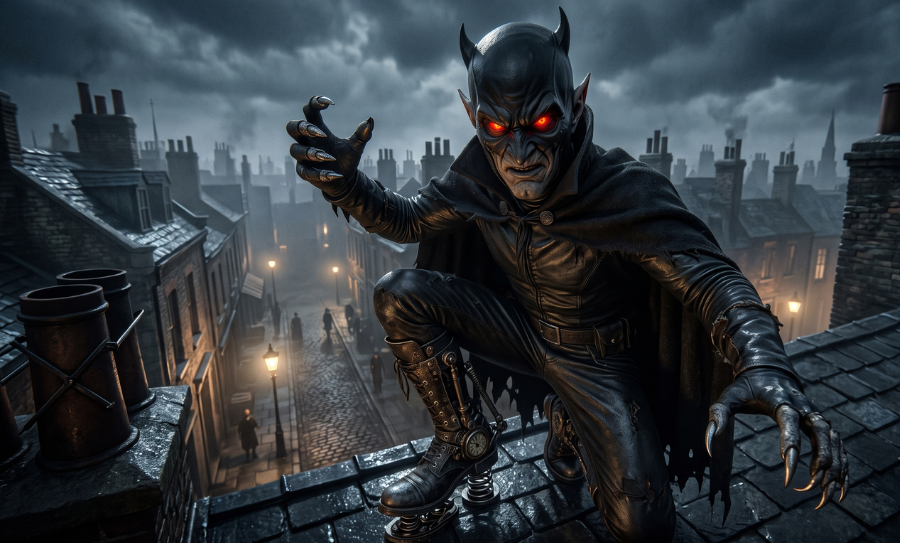
Late one winter evening in February 1838, eighteen-year-old Jane Alsop answered a frantic knocking at her family’s front door in south west London. A man standing in the shadows claimed to be a police officer who had just caught the neighbourhood’s notorious phantom. But when Jane brought a candle closer, the figure threw off his dark cloak to reveal a grotesque face, pointed ears, and eyes like burning red balls of fire. Before she could scream, he spat a terrifying blue-and-white flame directly into her face and tore at her dress with razor-sharp metal claws.

This was not a campfire ghost story; it was a sworn police report detailing an assault by Spring-Heeled Jack—Victorian England’s most infamous urban legend. Yet, in one of the most remarkable twists in history mysteries, this horrifying real-life assailant would eventually evolve into the world’s very first prototype superhero.

The London Terror and the First Sightings

The panic began in late 1837. One of the earliest reports involved a servant named Mary Stevens, who was walking through Clapham Common when a strange, cloaked figure leaped from a dark alleyway, grabbed her, and violently clawed at her skin before bounding away over high fences. Reports quickly trickled in from all across London describing a tall, athletic man wearing a tight oilskin suit underneath a flowing black cape.

What truly unnerved the public was his impossible agility. Witnesses swore that Jack had mechanical springs built into the heels of his boots, allowing him to vault nine-foot brick walls, leap across wide alleyways, and vanish into thin air with a high-pitched, ringing laugh.

Just eight days after the attack on Jane Alsop, Jack struck again in Limehouse. Eighteen-year-old Lucy Scales was walking home with her sister when a cloaked stranger stepped out of Green Dragon Alley. Without saying a word, he spat a blinding cloud of blue flame into her face, driving her into violent hysterical fits. The reign of terror grew so severe that the Lord Mayor of London, Sir John Cowan, held a public session at Mansion House to address an anonymous flood of complaints regarding the mysterious “devil” harassing the city.

A Demon, Nobleman, or Mass Hysteria?

As panic reached a fever pitch, Londoners desperately searched for answers. Who—or what—was Spring-Heeled Jack?

The most popular contemporary suspect was Henry de la Poer Beresford, the 3rd Marquess of Waterford. Known as the “Mad Marquess,” he was an outrageously wealthy, reckless Irish nobleman infamous for drunken brawls, vandalism, and cruel pranks. Rumours spread that Waterford had made a foolish wager with his aristocratic friends to dress up in a demonic disguise and terrorize London suburbs.

Many argued that Jack was simply a network of copycats using crude stilts, oil lamps, and flash powder, while many doctors blamed widespread mass hysteria, pointing out how ordinary night crimes were being transformed by fearful imaginations into supernatural encounters.

Wandering Beyond London: 1870s to 1904

While the original London spree subsided, Spring-Heeled Jack didn’t vanish—he went on tour. Over the decades, reports of the fire-spitting leaper migrated across the Midlands, Scotland, and the coastal towns of Britain.

In August 1877, Jack resurfaced at the military garrison in Aldershot. A sentry on guard duty challenged a dark figure approaching him through the mist. The figure ignored the command, stepped forward, and slapped the soldier across the face with icy hands. Other guards fired upon the intruder to no effect, and the entity escaped by taking massive, unnatural bounds into the darkness. Sentries were subsequently issued live ammunition with orders to shoot the “night terror” on sight.

That same autumn, an angry mob in Lincoln cornered a sheepskin-clad figure near the Newport Arch. Residents fired rifles at him, but Jack simply laughed, leaped onto a nearby rooftop, and disappeared.

The phantom made his final public appearances in the northwest port city of Liverpool. After rooftop sightings around Saint Francis Xavier’s Church in Everton during the late 1880s, his absolute last recorded sighting hit the press in September 1904. Terrified crowds on William Henry Street reported seeing a cloaked man making unbelievable leaps across residential rooftops before dropping into the shadows forever.

Enter the Penny Dreadfuls

While the real-world monster spent decades slinking through British alleys, a revolutionary publishing boom reframed his story entirely.

During the mid-19th century, industrial printing technology made paper cheap just as literacy rates skyrocketed among the working class. Publishers capitalized on this by creating Penny Dreadfuls—cheap, weekly 8-to-16-page serial pamphlets filled with lurid, sensationalized stories and dramatic front-page woodcuts. Priced at a single penny, teenagers and labourers devoured tales of gothic horror and urban crime. Though Victorian authorities denounced them as trash that corrupted the youth, the dreadfuls spawned legendary pop-culture figures like Sweeney Todd and Varney the Vampire.

Eventually, penny dreadful authors set their sights on the ghost story that had haunted their parents’ generation: Spring-Heeled Jack.

From Fiery Fiend to Masked Vigilante

When writers like George Charlton began publishing serials like Spring-heel’d Jack: The Terror of London between the 1860s and 1880s, they executed a radical artistic shift. They stripped away Jack’s real-world predatory nature and reimagined him as a misunderstood anti-hero.

The stories rationalized his supernatural abilities. Jack wasn’t a demon from hell; he was a brilliant human inventor who used spring-loaded boots, chemical fire-spitting devices, and armoured suits to get the upper hand. Furthermore, authors gave him a noble origin story: Jack’s secret identity was Bertram Hart, a wealthy, honourable nobleman who had been swindled out of his title and inheritance.

To right the world’s wrongs, Hart adopted a dual life. By day, he walked the streets as an ordinary gentleman. By night, he put on his horned mask, cape, and spring-boots to strike terror into corrupt aristocrats, brutal street gangs, and swindlers. Instead of preying on Londoners, the fictional Spring-Heeled Jack used his terrifying persona to fight for the helpless.

The Superhero Blueprint

By shifting Spring-Heeled Jack from newspaper headlines into cheap pulp serials, Victorian writers unknowingly built the structural framework for modern comic book superheroes.

Decades before Bruce Wayne ever donned a cowl, the fictional Spring-Heeled Jack established every key trope of the dark vigilante anti-hero:

A wronged nobleman stripped of his rightful status.

A terrifying night-themed disguise meant to strike fear into the hearts of criminals.

A reliance on custom mechanical gadgets and mobility gear to navigate city rooftops.

A secret lair and a double life hidden from society.

From a feared real-life assailant terrorising London’s fog-choked streets in 1837 to an early inspiration for characters like Batman and The Shadow, Spring-Heeled Jack remains one of history’s most fascinating cultural transformations—proving that sometimes, our most enduring superhero icons may be forged from our deepest real-world fears.

The Howden Moor Mystery

The 1997 Phantom Crash

On the cold, foggy night of March 24, 1997, emergency dispatchers across South Yorkshire and Derbyshire were overwhelmed by a sudden wave of frantic calls. Dozens of locals all reported the exact same chilling scene: a low-flying aircraft dipping beneath the hills, a blinding flash of light, and a ground-shaking explosion.

Police cars sped toward the high moors, local hospitals were placed on mass-casualty standby, and search-and-rescue teams took to the skies.

Yet, when morning broke over Howden Moor, there was no burning metal, no crater, and no missing plane.

Nearly three decades later, the Howden Moor Incident—often dubbed “The Sheffield Incident”—remains one of the UK’s most fascinating aviation mysteries. Here is the complete, definitive breakdown of the eyewitness logs, scientific data, official investigations, and leading theories surrounding that night.

The Night the Moors Shook: A Timeline

To understand how the mystery unfolded, we can reconstruct the night of March 24 and the massive search that followed:

Routine Military Drills End 21:35 GMT

Official Ministry of Defence (MOD) flight logs confirm that scheduled low-flying military training exercises in the Peak District airspace officially wrap up.

First Seismic Shockwave Recorded 21:52 GMT

Seismometers operated by the British Geological Survey (BGS) in Edinburgh register a sharp acoustic shockwave originating over the South Yorkshire region.

Eyewitness Sightings & 999 Call Surge 22:00 GMT

Over 50 emergency calls flood South Yorkshire Police. Callers in Bolsterstone, Strines, and Sheffield report a low-flying light aircraft dipping below the ridge, followed by an explosion and a bright orange-red glow. On-duty police patrols near Penistone feel their patrol cars shudder violently.

Second Seismic Shockwave Recorded 22:06 GMT

BGS sensors record a second distinct acoustic shockwave—matching the wave signature of a high-altitude sonic boom rather than a ground impact.

The A57 Hitchhiker Encounter 23:00 – 00:00 GMT

A motorist driving along the A57 (Snake Pass) reports being flagged down by a dishevelled, panicked man who smells strongly of aviation fuel. The man flees back into the treeline when the driver hesitates to give him a ride.

Air Search & Rescue Scrambled 23:25 GMT

An RAF Sea King helicopter from 202 Squadron (“E” Flight) is deployed alongside South Yorkshire Police air support to conduct thermal imaging sweeps over Howden Moor. 

Overnight Search Concludes First Sweep 02:55 GMT

The RAF Sea King concludes its initial night sweep, reporting zero thermal signatures, wreckage, or fires on the moor.

Daylight Ground Sweep Activated 08:15 GMT

Over 150 Mountain Rescue personnel, equipped with search dogs, sweep 40 square miles of boggy heather alongside a second RAF Sea King pass.

Operation Officially Stood Down 12:10 – 13:00 GMT

With no wreckage, scorch marks, or missing civilian or military aircraft reported anywhere in the UK, search commanders officially call off the rescue operation.

Detailed Eyewitness & Field Reports

The sheer variety and detail of the eyewitness reports that night are what make the Howden Moor Incident stand out from typical urban legends:

Civilian Sightings & Local Residents

Multiple independent witnesses in Strines and High Bradfield described seeing a twin-engine light aircraft flying at dangerously low altitudes. Local gamekeepers and farmers reported hearing a low-flying engine roaring overhead before it abruptly cut out, replaced seconds later by a heavy impact thud that rattled house windows and knocked glassware off shelves.

The “Triangular Craft” & Search Jets

In the hour leading up to the main shockwaves, witnesses in the western suburbs of Sheffield reported seeing a large, dark, triangular or wedge-shaped aircraft flying just above tree level. Minutes after the double explosion, residents near the Upper Derwent Valley reported fast-moving military jets flying unusually low over the moors, with some describing spotlights sweeping the dark terrain below.

Law Enforcement Logs

It wasn’t just civilians calling emergency dispatches. On-duty police officers patrolling near Penistone and High Bradfield logged official reports after feeling their patrol cars shake under an acoustic shockwave. Looking out toward Howden Reservoir, officers recorded seeing a brief, bright orange-red glow illuminate the horizon.

The A57 Hitchhiker

One of the stranger police log entries involved a statement from a motorist on the A57 (Snake Pass), which runs alongside Howden Moor. Roughly an hour after the reported crash, the driver stopped to check on a man frantically flagging down cars in the dark. According to the police report, the man appeared confused, acted erratically, and smelled strongly of aviation fuel. When the driver hesitated to let him in, the man vanished back into the treeline and was never identified, despite subsequent police sweeps of the area.

The Official Investigations Findings

When the initial ground search yielded no physical evidence, investigators turned to scientific instruments and aviation logs to understand what actually occurred:

British Geological Survey (BGS): Seismologists reviewed readings from their Edinburgh sensors. The data confirmed two distinct acoustic shocks at 21:52 and 22:06 GMT. Crucially, the wave signatures did not match an object crashing into the earth; they were classic signatures of high-altitude sonic booms.

Civil Aviation Authority (CAA): The CAA cross-referenced all active flight plans across the country. Every registered commercial and private aircraft was accounted for, and no airfields reported an overdue or missing plane.

Ministry of Defence (MOD): During Parliamentary inquiries in 1998, the MOD confirmed that routine low-flying military training took place in northern airspace earlier that evening, wrapping up by 21:35 GMT. However, the MOD firmly maintained that no RAF jets broke the sound barrier (which is strictly illegal over UK land), no military aircraft went missing, and no fighters were scrambled to search the moor.

The Four Primary Theories

With no physical wreckage ever recovered on the moor, researchers have narrowed down the night’s events to four leading hypotheses:

Covert or Unscheduled Military Jet

The seismic readings conclusively proved that objects broke the sound barrier high over the Pennines. The most plausible explanation is that military aircraft—either RAF or foreign units operating during night exercises—accidentally went supersonic. To avoid severe political and financial fallout over an illegal overland supersonic flight, official channels simply remained silent.

Meteorite or Space Debris

A meteor breaking up as it entered the lower atmosphere could account for the brilliant light flash, the illusion of a descending fireball near the ridgeline, and the atmospheric shockwaves recorded by seismic sensors.

Illicit Contraband Flight

Another hypothesis suggests an unregistered light aircraft engaged in drug smuggling was flying below radar. The plane may have experienced engine trouble or made a low-altitude cargo drop on the moors—accounting for the engine sounds, the fuel-smelling hitchhiker, and the initial low sightings—before pulling up and exiting the airspace undetected.

Optical & Topographical Illusion

Low cloud cover combined with steep; dark topography can easily distort high-altitude lights. Aircraft lights descending behind an elevated ridge like Howden Moor can create a remarkably convincing optical illusion of a plane crashing into the ground, triggering a psychological chain reaction when paired with simultaneous atmospheric booms.

The Ongoing Verdict

Official agencies, including the Ministry of Defence and South Yorkshire Police, consider the case officially closed. They attribute the event to an unexplained atmospheric and acoustic phenomenon paired with visual misinterpretation from the ground.

Yet for the locals who felt their houses shake and saw the lights over the ridge that night, the memory remains as vivid as ever. Whether it was a rogue military jet, a disintegrating meteor, or an optical trick of the night, the “Phantom Crash of 1997” remains a legendary chapter in Peak District history.

The Overtoun Bridge

Scotland’s Unusual Bridge

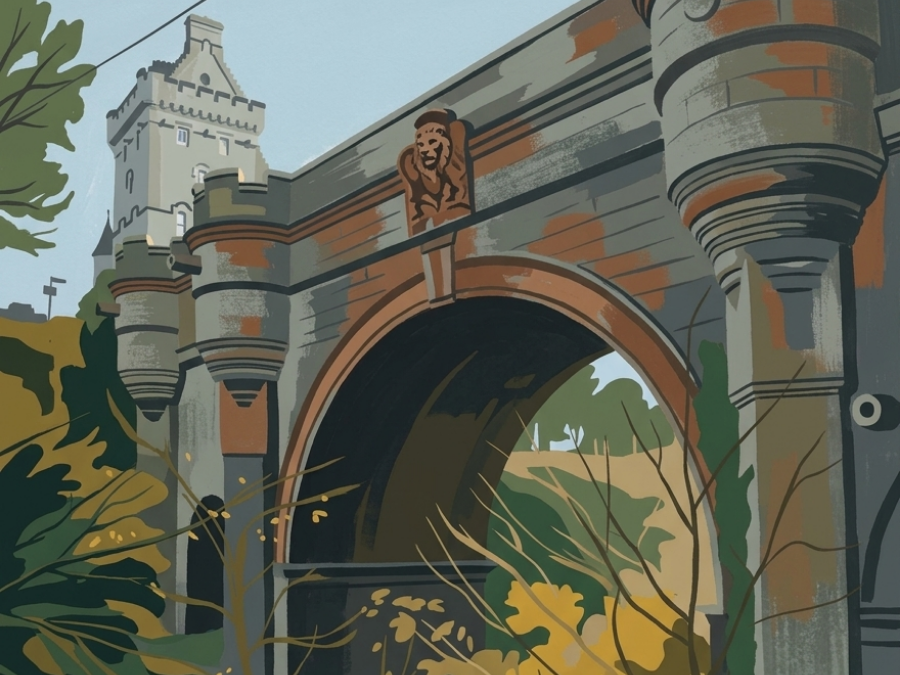
Nestled near Dumbarton, Scotland, Overtoun Bridge is a stunning piece of Victorian architecture. Built in 1895 and designed by landscape architect H. E. Milner, this Gothic stone arch spans the lush Overtoun Burn on the approach to Overtoun House.

To the casual observer, it looks like a scene straight out of a classic British Period drama. To local dog owners, however, it is known by a far more chilling name: The Dog Suicide Bridge.

The Spooky Phenomenon

Since the 1950s, hundreds of dogs have inexplicably leaped over the bridge’s waist-high stone parapet into the 50-foot rocky gorge below. Estimates suggest that between 300 and 600 dogs have taken the plunge, resulting in at least 50 fatalities and many more severe injuries.

What makes the phenomenon even stranger are the precise patterns behind the jumps:

The Location: Nearly all reported incidents occur at the exact spot—between the last two stone parapets on the right-hand side of the bridge (facing away from Overtoun House).

The Breeds: Long-nosed, scent-driven hunting breeds—such as Collies, Retrievers, and Spaniels—are overwhelmingly involved.

The Weather: The jumps almost exclusively happen on clear, dry days, which is precisely when scents carry best through the air.

Eyewitness Accounts: What Really Happens on the Bridge?

Firsthand reports from dog owners and investigators describe a sudden, eerie shift in behaviour right before a dog leaps.

Cassie the Springer Spaniel (2014)

Alice Trevorrow was walking her obedient 3-year-old Springer Spaniel, Cassie, near the bridge when the unimaginable happened. Trevorrow recalled that Cassie suddenly stared at something above the bridge, raised her nose into the air, and sprinted straight for the wall. Without any hesitation, she vaulted over the edge. Cassie miraculously survived the 50-foot drop onto the rocks with severe injuries, but her owner maintained that something sinister seemed to draw her obedient dog over the edge.

The 2004 Golden Retriever Incident

While taking a peaceful family stroll across the bridge, local resident Kenneth Meikle watched his Golden Retriever suddenly bolt without warning or provocation. The dog launched itself straight over the right-hand wall into the gorge below. Luckily, the dog landed on a patch of turf and survived, but Meikle was stunned by the sheer speed of the event—there was no whimper, bark, or second thought before the jump.

An Expert’s Firsthand Test (2005)

When animal behaviourist Dr. David Sands investigated the site for the Scottish SPCA, he brought a 19-year-old Golden Retriever named Hendrix to test the environment. As Hendrix crossed the bridge, he remained completely calm until reaching the infamous spot between the last two parapets. Suddenly, the dog’s body language shifted: his head went up, his tail raised, and he began frantically pulling toward the stone wall.

Science vs. The Supernatural

How do experts and locals explain this unsettling behaviour?

The Biological Explanation (Science)

Dr. David Sands and other animal behaviourists firmly agree that dogs do not intentionally commit suicide. Instead, the jumps are driven by an instinctual sensory overload:

The Scent: The lush ravine below is home to wildlife like pine martens, squirrels, and minks. The pungent smell of male mink urine is irresistible to scent-driven breeds.

The Visual Illusion: Because the bridge has high, thick stone walls, a dog’s line of sight to the drop below is completely blocked. From the dog’s perspective, the stone ledge looks like level ground hiding a small animal, masking the deadly 50-foot drop on the other side.

Ghosts and Celtic Folklore (The Paranormal)

For those who prefer a ghost story, local folklore offers plenty of eerie alternatives:

The White Lady of Overtoun: Local legend holds that the grounds are haunted by the ghost of Lady Overtoun, a grieving widow who spent her final years isolated at Overtoun House in the early 20th century.

A “Thin Place”: In ancient Celtic tradition, certain geographical spots are referred to as “thin places”—locations where the veil between the physical world and the spiritual realm is unusually thin.

Visiting Safely

While Overtoun Bridge remains a popular and beautiful location for walkers, its reputation speaks for itself. If you ever find yourself visiting the grounds of Overtoun House with a four-legged friend, local authorities offer one simple piece of advice: keep your dog on a short lead at all times.

The Bromley Batman

South London’s masked vigilante

In mid-2015, British tabloids exploded with a story that sounded less like local news and more like a comic book page brought to life. A mysterious, heavily built man dressed in black was reportedly patrolling the streets of South East London, swooping in to save unsuspecting citizens from muggers, knife-wielding gangs, and street harassment.

Dubbed by the press as the “Bromley Batman,” this modern urban legend captivated the public for over two years before disappearing as quietly as he arrived. Here is the full story behind London’s most famous real-life superhero, the eyewitness accounts, and the legal reality of street vigilantism.

Who Was “The Shadow”?

Despite the media’s catchy superhero branding, the vigilante himself was quick to reject the Batman persona. In an anonymous email sent to the London Evening Standard in June 2015, he called the nickname “crap” and requested to be known simply as “The Shadow”.

Eyewitnesses across South London consistently described a similar figure:

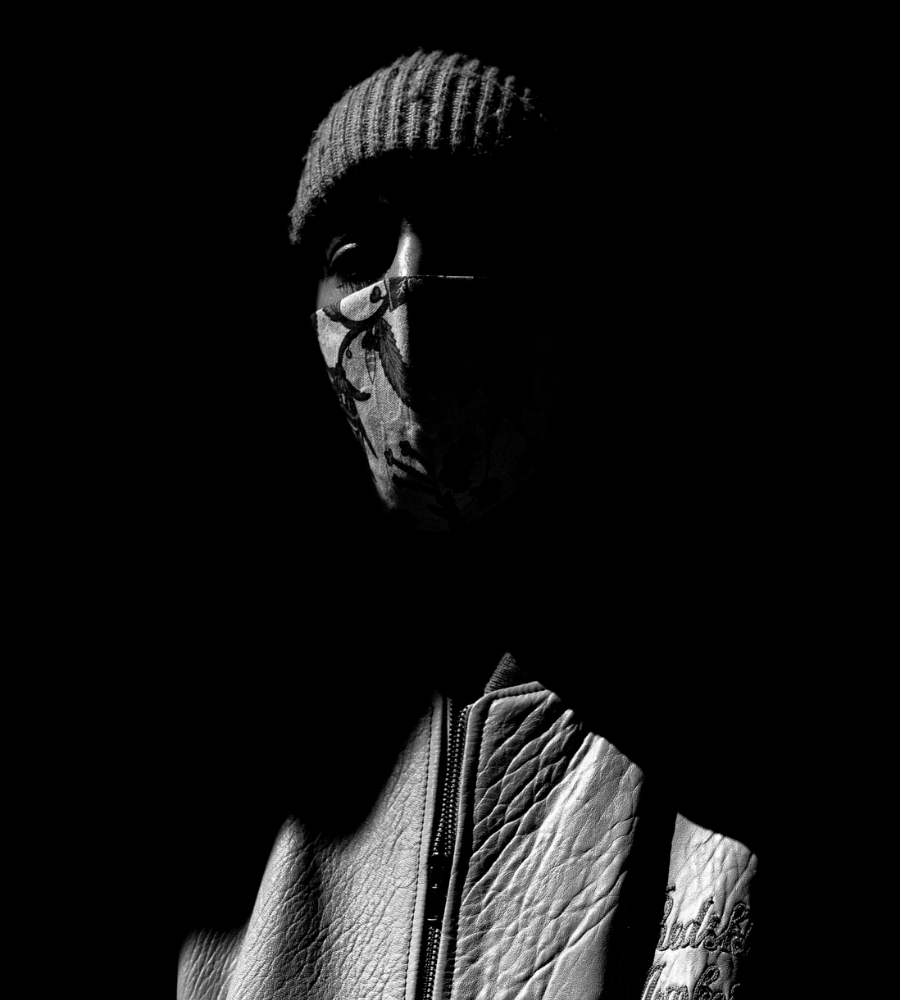
Appearance: Standing roughly 6 feet tall with a muscular frame, he wore combat trousers, a tight muscle top, a black bandana covering his lower face, and sported a distinct “big, beautiful beard”.

Combat Style: Highly disciplined. Rather than throwing wild, reckless punches, witnesses noted he used fluid joint locks, wrist holds, and momentum to quickly disarm and neutralize attackers without escalation.

Motive: The anonymous vigilante claimed to be a regular working man in his late 20s to 40s with a family and a day job. He insisted he didn’t view himself as a superhero—he was simply a lifelong martial artist who was “sick of seeing crime on the news” and wanted to make his community safer for future generations.

A Timeline of Famous Sightings:

The Knife-Point Rescue in Bromley

June 2015: A City worker named Ken was cornered in Bromley by a gang demanding his phone and wallet. A masked man sprinted into the alleyway, kicked the ringleader down, disarmed the group using martial arts, and told Ken to run. Days later, “The Shadow” contacted the press anonymously to set the record straight.

The ‘Human Battering Ram’ in Lewisham

September 2015: A man named Damien Ford was jumped by two muggers near a train station. The vigilante sprinted across the street, ramming one mugger with his full body weight before putting the second in a wrist lock, holding both on the pavement until the victim safely escaped.

Sightings on Holiday in Devon & Cornwall

2015 – 2016: Reports emerged from Newquay and Exeter of a bearded, masked man in combat gear intervening in local bag-snatchings. British tabloids poked fun at the idea that the Bromley Batman was taking his crime-fighting routine on summer vacation.

The Vanishing Act

Late 2017: After a series of reported interventions in Bexley—where he introduced himself to a rescued woman as “Guardian”—the sightings suddenly dried up. The vigilante hung up his mask and vanished without a trace.

Fact vs. Urban Legend: Was He Real?

Was there truly a lone caped crusader roaming Bromley at night, or was this a classic case of tabloid sensationalism? The truth likely sits somewhere in the middle. The Metropolitan Police repeatedly stated they had no official police logs or reports matching these specific vigilante actions. While they acknowledged the viral media reports, officers treated the story with a high degree of criticism. Local journalists and gym owners in South London floated an alternative theory: “The Bromley Batman” may not have been one individual, but a small network of martial artists or off-duty security staff operating in the area who shared a similar look and goal.

The Legal Reality: Can You Be a Real-Life Superhero?

While the public cheered for “The Shadow,” active street patrolling operates in a precarious legal minefield under UK law.

In the UK, vigilantism itself isn’t a standalone charge, but putting on a mask to fight crime pushes right up against strict statutory boundaries:

What the Law Protects: Under Section 3 of the Criminal Law Act 1967, any citizen is legally permitted to use “such force as is reasonable in the circumstances” to prevent a crime or assist in arresting an offender. Furthermore, you do not have to wait to be hit before protecting someone else; stepping in to defend a victim from an active violent assault is fully protected. Under Section 24A of the Police and Criminal Evidence Act 1984, a citizen can also make a formal arrest to detain someone committing a serious offence until police arrive.

Where It Becomes Illegal: The key phrase in UK self-defense law is proportionality. Force must strictly stop the moment the threat is neutralized—striking or aggressively restraining an attacker who is already subdued or trying to flee instantly converts a hero’s intervention into unlawful assault. Additionally, actively patrolling with weapons or tactical gear (such as batons or blades) directly violates the Prevention of Crime Act 1953.

Police Stance: The Metropolitan Police consistently warn against taking the law into your own hands. Intervening in violent street crime without training risks severe injury, jeopardizes official police investigations, and can quickly leave well-meaning citizens facing criminal charges if they misjudge a situation or use excessive force.

Beyond the Bromley Batman, several other unusual, costumed “Batman” sightings and real-life superhero stories have made headlines around the world:

The “Bradford Batman” (West Yorkshire, UK – 2013)

In early 2013, CCTV footage went viral showing a man in a classic 1960s Adam West-style Batman costume marching a wanted suspect into Trafalgar House police station in Bradford. He handed the suspect over saying, “I’ve caught this one for you,” before vanishing into the night.

The Reality: Unlike the anonymous Bromley vigilante, the Bradford Batman was quickly unmasked as 39-year-old takeaway driver Stan Worby. He hadn’t fought any crime; he had just dressed up for a football match at Wembley and agreed to drive his friend, who was wanted for burglary, to the police station to turn himself in as a joke.

The “Batman of Lagos de Moreno” (Jalisco, Mexico – 2026)

A far more aggressive variation of the trope emerged in Jalisco, Mexico, where an anonymous figure—dubbed by locals and social media as the “Batman of Lagos de Moreno”—began targeting motorcycle thieves.

The Reality: Rather than turning suspects in to police stations, this figure tracks down alleged thieves, duct-tapes them securely to street poles alongside the stolen bikes, paints the word “Ratero” (thief) across their foreheads, and leaves them for the public and authorities to find.

Phoenix Jones & the Rain City Superhero Movement (Seattle, USA)

While not using the Batman name, Seattle’s Phoenix Jones (real name Benjamin Fodor) operated in a similar vein as a self-styled Dark Knight.

The Reality: Wearing a custom-built, body-armored suit with a cowl, Jones led a group called the “Rain City Superhero Movement”. Armed with tasers, nightsticks, and pepper spray, he patrolled Seattle nightspots intervening in fights and car break-ins. His career highlighted the legal risks of real-life vigilantism, ultimately resulting in multiple clashes with local police and eventual arrest.

Shadows Over the Fells

Lake District UFO Sightings

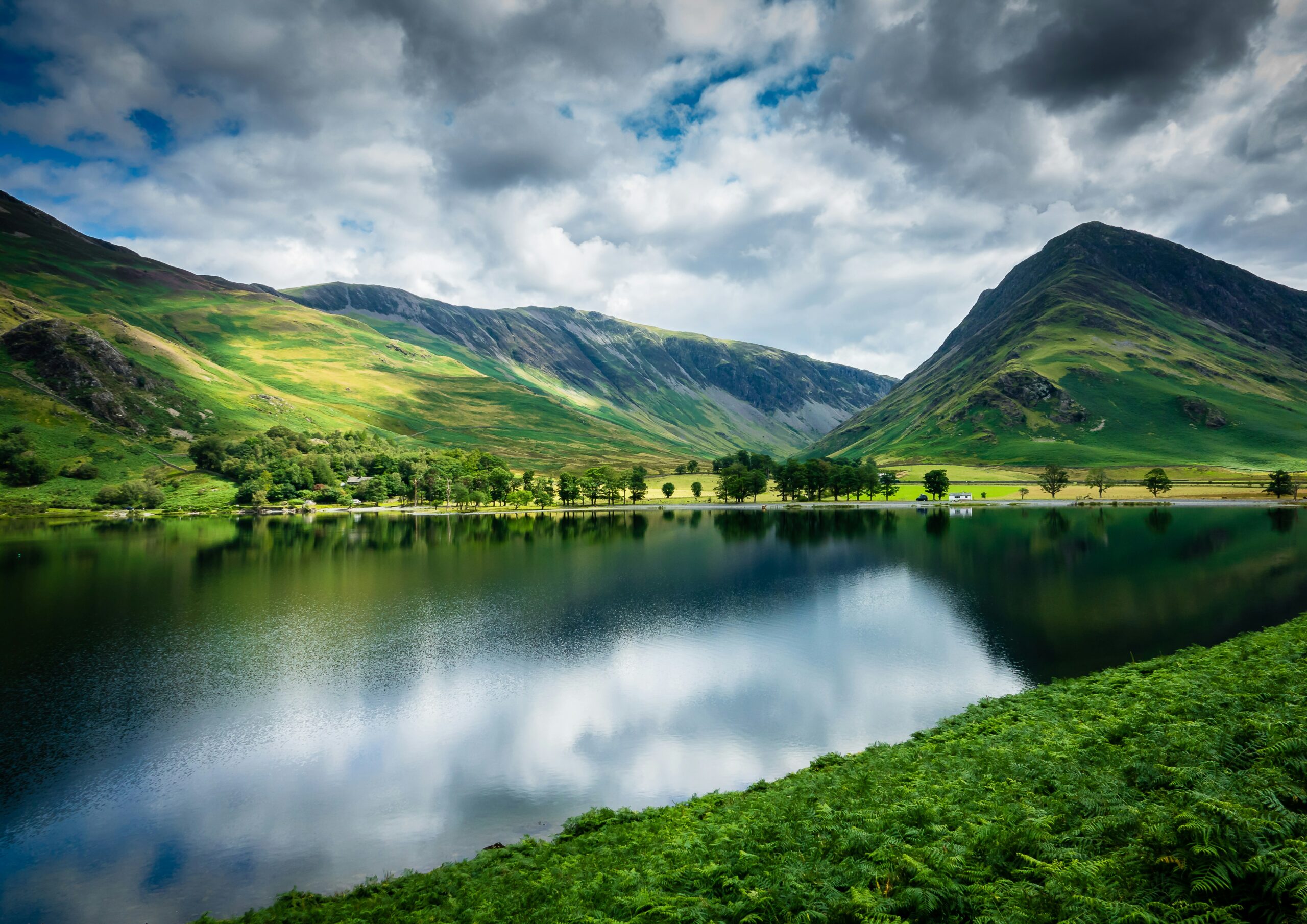
With its sweeping vistas, jagged peaks, and pitch-black rural nights, Cumbria has long captured the human imagination. But beyond the hikers, poets, and sheep, the Lake District holds another reputation: a rich, decades-long hotspot for unidentified aerial phenomena.

Unlike hotspots that rely on a single recurring urban legend, Cumbria offers a complete cross-section of ufology—from classic mid-century pranks and iconic photographic mysteries to credible multi-witness police sightings, official government logs, and military manoeuvres.

Unknown Saucers and “Cumbria’s Roswell”

The year 1954 put Cumbrian skies firmly on the map. In February, a 13-year-old schoolboy named Steven Darbishire created a national media sensation when he photographed a metallic, “Adamski-style” flying saucer hovering near the Old Man of Coniston footpath. The image drew public fascination before Darbishire eventually admitted years later that it was a clever prank using a suspended lamp base.

That same year, rumours spread that a metallic craft had crashed into the West Cumbrian fells near Workington. While no official physical evidence ever surfaced, British UFO researchers have long investigated claims of covert military retrieval operations in the area, earning the event the nickname “Cumbria’s Roswell.”

The Solway Firth Spaceman

Just on the northern edge of Cumbria at Burgh Marsh sits the origin of one of the world’s most famous paranormal photographs.

In May 1964, local fireman Jim Templeton took three standard photos of his five-year-old daughter. When developed by Kodak, one frame clearly showed a figure wearing a white, pressurized spacesuit standing directly behind her.

While Kodak confirmed the film was untouched, photographic analysts eventually suggested they had solved the puzzle through the optics of the camera:

Viewfinder Parallax: Older camera viewfinders only displayed about 70% of the actual frame, so Jim simply didn’t see his wife, Annie, standing in the background.

The Overexposure Effect: Annie was wearing a pale blue dress. Under the bright, harsh estuary sunlight, the film overexposed the fabric, blurring her turned back into a smooth, brilliant white “spaceman.”

The Windermere “Catamaran”

On August 28, 1977, the Lake District saw its most credible mass sighting. For 20 full minutes, a massive object slowly cruised over Lake Windermere in view of dozens of residents and ten on-duty police officers.

Witnesses described a colossal craft comparable in size to a football field, shaped like a “giant catamaran with twin hulls.” Ufologists pointed to extraterrestrial origins, but skeptics and aviation researchers believe witnesses were observing an experimental or privately owned silent airship tested under cover of dark.

The “Black Triangle” & Official Police Logs

Throughout the late 1980s, reports across the fells shifted toward sleek, silent “Black Triangles” (often called “Dudley Doritos”). Witnesses reported massive triangular shapes with corner lights hovering silently before accelerating at incredible speeds.

Freedom of Information (FOI) requests submitted to Cumbria Constabulary reveal that locals continued logging high-detail reports well into the modern era:

2011 (Wigton): A resident reported a “cylindrical flying object” hovering over their roof before vanishing, claiming to have captured video footage.

2014 (Carlisle): A caller reported a silent craft “the size of a jumbo jet” flying extremely low (400–500 feet), moving erratically side-to-side with flashing red and green lights.

2015: Police logged a report of a large spinning disc surrounded by smaller orbiting lights emitting a high-pitched sound.

Geography & Infrastructure

Why does Cumbria generate so many sightings? Beyond the supernatural, three grounded factors drive the regional phenomenon:

Low-Flying Military Operations

The Lake District is one of the UK’s primary low-flying training zones for the RAF. High-speed jets banking tightly between mountain valleys at dusk drop flares and light up dark terrain. Further north lies RAF Spadeadam, Europe’s premier electronic warfare flight training range, which frequently tests target drones and radar equipment.

Glacial Valley Optics

Deep lakes like Windermere, Haweswater, and Coniston Water act as acoustic and visual amplifiers. Jet engine noise reflects off steep fell walls, while light reflecting off still water during atmospheric temperature inversions creates floating “orb” illusions.

Nuclear Infrastructure

Sellafield, the UK’s primary nuclear processing facility, sits right on the Cumbrian coast. Statistically, UAP reports worldwide show a heavy clustering around nuclear weapons and power facilities, making West Cumbria a focal point for researchers.

Summary of Lake District UFO History

To understand the full arc of Lake District UFO lore, the region’s sightings can be broken down into three distinct categories across time:

Historical High-Profile Cases

Coniston Flying Saucer (1954): A famous photography frenzy caused by 13-year-old Steven Darbishire, later confessed to be a clever hoax using a suspended lamp base.

Workington “Cumbria’s Roswell” (1954): Local rumours of a downed metallic craft and secret military cleanup on the fells, remaining unconfirmed folklore to this day.

Solway Firth Spaceman (1964): An iconic photo by Jim Templeton showing a white-suited figure behind his daughter. Kodak verified the film was untouched, but photo analysts ultimately traced it to his wife, Annie, who was overexposed in a light blue dress and clipped out of the camera’s limited 70% viewfinder range.

Lake Windermere “Catamaran” (1977): A 20-minute mass sighting witnessed by dozens of civilians and ten on-duty police officers. The massive twin-hulled craft was suggested to likely be a quiet, experimental airship being tested at night.

Recurring Phenomena & Modern Official Records

1980s Black Triangle Wave: Frequent reports of silent, triangular craft (“Dudley Doritos”) making impossible manoeuvres over the fells.

Official Cumbria Constabulary Logs (2011–2015): Verified police reports including a cylindrical craft in Wigton (2011), a jumbo-jet-sized low-flying object in Carlisle (2014), and a spinning disc emitting high-pitched sounds (2015).

Primary Contributing Factors Behind the Reports

RAF Military Training: The Lake District is an active low-altitude flight zone for RAF jets, while nearby RAF Spadeadam conducts electronic warfare and drone tests.

Acoustic & Optical Geography: Glacial valleys magnify engine sounds, and still water creates mirage-like reflections of flares and bright planets during atmospheric inversions.

Proximity to Sellafield: West Cumbria hosts the UK’s premier nuclear facility, aligning with a global trend of UAP sightings clustering around nuclear energy and weapons infrastructure.

Whether driven by clever pranks, camera optics, top-secret aviation, or genuine mystery, the Lake District continues to prove that extraordinary landscapes invite extraordinary skies, extraordinary experiences, and extraordinary stories to share.

The Bury Big Cat

Phantom Pumas of the Pennines

When local legends and nocturnal encounters are discussed in the North West of England, most minds drift straight to famous UFO incidents in Todmorden. Yet, just down the road in the Metropolitan Borough of Bury—specifically around Radcliffe, Ramsbottom, and Pilsworth—a very different, far more grounded local mystery has been unfolding for decades.

Unlike one-off ghost stories or single-night events, reports of “phantom felines” around Bury are part of an ongoing, decades-long chapter in Lancashire and Greater Manchester folklore. Over the years, horse riders, elderly residents, and even Greater Manchester Police officers dispatched to frantic 999 calls have found themselves caught up in the phantom feline phenomenon.

The Eyewitness Reports:

There are several recent reports from a variety of people within the local community.

The Panther Chasing Deer

In mid-summer 2016, Greater Manchester Police received an urgent call from a resident off Bury New Road in Radcliffe. The caller described watching a massive black panther actively hunting and chasing deer across a farmer’s field. The witness remained utterly unshakeable in their conviction, telling the police handler that the creature was “definitely not a dog and definitely not a domestic cat.” Police searched the surrounding area, but no trace of the big cat was found.

The Radcliffe ‘Puma’

Two years later in July 2018, 81-year-old Peter Nield was looking out of his back window on Grindsbrook Road in Radcliffe. He watched a massive, pure-black cat smoothly trotting across the open field behind his garden. Though it was only in sight for about six seconds, Nield—insisting his vision was sharp—described the animal as a large puma or panther moving with distinct feline grace.

The Frenzied Horses of Pilsworth

Just months later in October 2018, a far more dramatic encounter occurred along the Roch Valley Greenway, a popular bridleway connecting Pilsworth and Bury. Friends Leonora Fleming and Nikki Allison were out riding their horses when heavy rustling broke out in an inaccessible thicket near a fishing lake.

Suddenly, their horses sensed something terrifying: Leonora’s horse went into a complete frenzy, spinning in circles and attempting to bolt in sheer panic. As she fought for control, she heard a deep, menacing growl and saw a massive black shape “the size of a Dobermann” lurking in the brush. Both riders—accustomed to foxes and stray dogs—agreed the size, muscularity, and movement were identical to a black panther.

The Ramsbottom “Jaguar”

A subsequent Freedom of Information (FOI) disclosure revealed that police had also been called to Ramsbottom, in the northern part of the Bury borough. A terrified local reported seeing a “black Jaguar cat, bigger than a fox with a long tail” slinking through the hills overlooking the town.

The Geography: Why the Bury Corridor Works

Why does this specific stretch of Greater Manchester generate such consistent reports? The secret lies in the geographical intersection of urban sprawl and rugged terrain:

The West Pennine Moors Corridor: To the north and west of Ramsbottom lie thousands of acres of unpopulated moorland, steep wooded valleys (cloughs), and abandoned stone quarries. A secretive predator could easily travel from Rossendale into valley edges without stepping on major roads.

River Valleys as Wildlife Highways: Natural strips like the Roch Valley Greenway and the River Irwell act as green highways. Roe deer, foxes, and wild rabbits travel these corridors straight into urban-adjacent pockets like Radcliffe.

An Exploding Prey Base: Over the last two decades, the roe deer population across Greater Manchester and Lancashire has grown rapidly, offering an ample food supply to sustain a large predator.

What is Behind the Mystery?

Whenever big cat sightings crop up in the Bury area, wildlife experts and local sleuths point to three main theories:

The 1976 Dangerous Wild Animals Act: Before 1976, keeping exotic pets like panthers, pumas, and cheetahs was legal and fashionable in Britain. When strict licensing laws, expensive insurance, and enclosure mandates were introduced, some wealthy owners reportedly drove out to remote spots—such as the West Pennine Moors—and set their pets free to avoid prosecution.

Optical Scale & Large Feral Felines: Skeptics note that a standard black domestic cat or an oversized dog walking across an open field without visual markers (like fences or trees) can trick the human brain into perceiving a much larger animal. Furthermore, feral cat hybrids measuring over 3 feet in length do exist in the wild.

DNA Realities: While many sightings stem from mistaken identity, researchers in recent years have successfully recovered DNA evidence from black hair caught on barbed wire following UK livestock attacks, yielding a 99% match to actual exotic big cat species—proving that a small, elusive population really has existed in the British countryside.

Whether it’s a surviving panther living off the local roe deer population or a series of highly synchronized cases of mistaken identity, the fields and valleys around Bury remain one of the UK’s most compelling hotspots for big cat sightings.

Todmorden UFO incident

A Combination of Encounters

Nestled in the Pennines along the West Yorkshire–Lancashire border lies the small valley town of Todmorden. In 1980, this quiet area earned a reputation as Britain’s capital of “UFO Activity” due to a series of baffling events surrounding local police officer PC Alan Godfrey. The Todmorden UFO Incident remains one of the most famous and heavily investigated close encounter cases in British history. What makes this story so legendary isn’t just the sighting itself, but the tragic, unexplained mystery that preceded it.

The Twisted Precursor: Zigmund Adamski

Six months prior to his own encounter, in June 1980, PC Alan Godfrey was one of the investigating officers called to a coal yard at a Todmorden railway station. A 56-year-old Polish miner named Zigmund “Ziggy” Adamski had been found dead, resting atop a 10-foot-high pile of coal.

The forensic details surrounding Adamski’s body left investigators completely stumped. You can read further into the details of Zigmund Adamski on our post created for his case here: Zigmund Adamski.

The Incident: November 28, 1980

In the early morning hours of November 28, 1980, at approximately 5:00 AM, PC Alan Godfrey was driving his Ford Escort patrol car down Burnley Road on the outskirts of Todmorden while investigating reports of loose cattle.

As he rounded a bend, he spotted an object about 20 yards ahead hovering five feet off the ground. At first, he assumed it was a double-decker bus that had skidded sideways across the road. Upon closer inspection, he realized he was looking at something far more unusual:

Object Description: A massive diamond- or dome-shaped object measuring roughly 20 feet wide and 14 feet high. It featured a slowly rotating lower half and a bank of dark, window-like lights.

Equipment Failure: Godfrey attempted to call for backup, but both his patrol car’s VHF radio and his personal UHF radio unit went completely dead with static.

The Notebook Sketch: With communications down, Godfrey grabbed his notepad and sketched the physical object directly in his police notebook.

The Flash of Light: Suddenly, a brilliant, blinding flash of light enveloped the car.

Missing Time and Physical Evidence

Following the sudden flash of light, Godfrey experienced a lapse in memory and found himself driving his patrol car 30 yards further down the road, with the craft completely gone.

Missing Time: When he checked his watch, he realized that between 15 and 25 minutes were unaccounted for.

Physical Marks: His left police boot was split open, and he discovered an itchy red mark on his foot.

Dry Tarmac: Upon returning to the exact spot where the object had hovered, Godfrey noticed that while all surrounding roads were soaked from heavy rain, the patch of tarmac directly beneath the object was completely bone-dry.

Corroborating Reports: When Godfrey returned to the station, he learned that three other on-duty officers in nearby areas had also reported seeing a brilliant light moving toward Todmorden at that exact time.

Hypnotic Regression and Alien Claims

Facing intense psychological stress and ridicule from colleagues, Godfrey underwent regressive hypnosis months later under the supervision of a psychiatrist to recover his missing memories.

During these sessions, he recalled a much stranger sequence of events:

Engine Stoppage: The blinding beam of light had stopped his car engine and electronics.

Inside the Craft: He remembered being taken into a room that resembled a house or laboratory rather than a conventional spaceship.

The Entities: He reported being examined by a tall, bearded humanoid figure wearing Biblical-style robes who communicated telepathically and named himself “Yosef”. Surrounding Yosef were small, robot-like entities with lamp-shaped heads.

Important Context: Decades later, Alan Godfrey distanced himself from the abduction details retrieved under hypnosis. In 2018, he stated that the abduction portion was likely a vivid dream or a stress-induced hallucination. However, he has stubbornly maintained that the physical, diamond-shaped object blocking Burnley Road was 100% real.

The Aftermath: Career Fallout, “Men in Black,” and Britain’s Roswell

What followed the events of November 28, 1980, was a dramatic fallout that completely transformed Alan Godfrey’s life, turning a respected, pragmatic Yorkshire police officer into a central figure of international UFO folklore.

Media Storm and Institutional Pressure

When news broke that a serving police officer had drawn a craft in his official police notebook and reported missing time, the story went global. Reporters descended on Todmorden, transforming the quiet Pennine valley town into what journalists dubbed “Britain’s Roswell”.

However, within the West Yorkshire Police force, Godfrey’s account was met with deep skepticism and institutional hostility. Senior police hierarchy questioned his mental stability and fitness for duty. Godfrey alleged that he was subjected to unexpected medical checks and covert pressure aimed at discrediting him. During one surprise medical examination, a police surgeon reportedly warned Godfrey to “watch his back,” advising him that certain figures within the establishment were determined to force him out of the police force at any cost.

“Men in Black” and the Ministry of Defence

Godfrey maintained that official investigations into both his sighting and the death of Zigmund Adamski were actively hindered. He claimed he was visited by representatives from the Ministry of Defence (MoD) and shadowy “men in black” figures who instructed him not to speak to the media or disclose further details about either incident. Furthermore, odd physical evidence—such as the missing official reports, original forensic samples from Adamski’s body, and local site details—seemed to vanish or encounter administrative roadblocks.

Leaving the Force and Writing His Story

The relentless strain, public scrutiny, and workplace hostility took a heavy physical and psychological toll on Godfrey. He was eventually medically retired from the police force.

In the years following his departure, Godfrey sought to reclaim his narrative. He authored a self-published memoir titled Who or What Were They?, detailing the events of that fateful night, the bizarre connection to Zigmund Adamski, and the intense cover-up efforts that disrupted his career.

Distancing from Abduction Memory vs. The Physical Sighting

As the decades passed, Godfrey maintained a grounded, pragmatic approach to his story. He openly expressed caution regarding the abduction details uncovered during hypnotic regression—acknowledging that the visions of “Yosef” and the alien figures may well have been vivid hallucinations or dream states triggered by severe trauma and stress.

However, Godfrey has never recanted his core testimony regarding the physical event on Burnley Road: “I know what I saw. It was a solid, physical, diamond-shaped object floating five feet off the ground… no amount of ridicule will ever change that.”

Enduring Cultural Legacy

Today, the Todmorden UFO incident remains one of the most compelling cold cases in British ufology. It has inspired books (such as Rik Moran’s Chance Encounters In The Valley Of Lights), investigative documentaries, and cold-case podcasts analyzing the unsolved mystery of Zigmund Adamski.

Decades later, as government bodies around the world begin taking Unidentified Anomalous Phenomena (UAP) more seriously, PC Alan Godfrey’s experience stands out not as a wild tall tale, but as the brave account of a frontline officer who reported exactly what he saw—and paid a heavy personal price for it.

Copyright © 2026 Electronic Shuffle

Theme by Anders NorenUp ↑