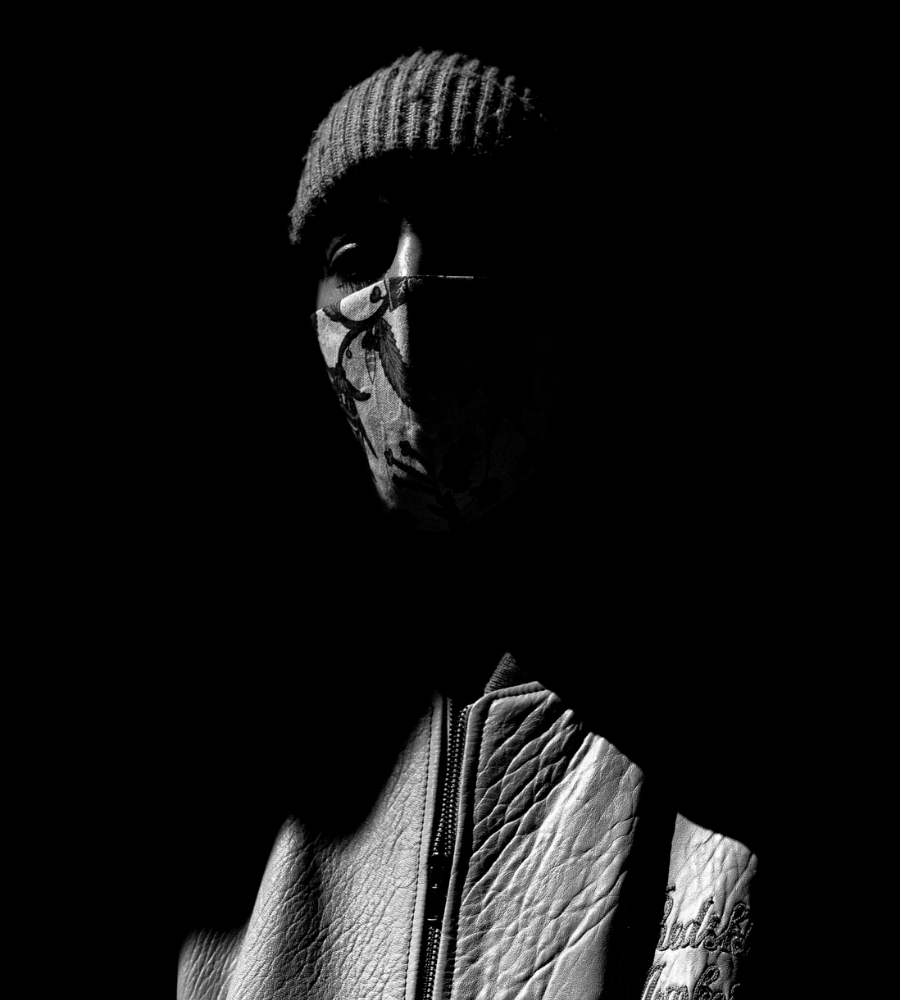
South London’s masked vigilante
In mid-2015, British tabloids exploded with a story that sounded less like local news and more like a comic book page brought to life. A mysterious, heavily built man dressed in black was reportedly patrolling the streets of South East London, swooping in to save unsuspecting citizens from muggers, knife-wielding gangs, and street harassment.
Dubbed by the press as the “Bromley Batman,” this modern urban legend captivated the public for over two years before disappearing as quietly as he arrived. This is the research behind London’s most famous real-life superhero, the eyewitness accounts, and the legal reality of street vigilantism.
Who Was ‘The Shadow’?
Despite the media’s catchy superhero branding, the vigilante himself was quick to reject the Batman persona. In an anonymous email sent to the London Evening Standard in June 2015, he called the nickname “crap” and requested to be known simply as “The Shadow”. Eyewitnesses across South London consistently described a similar figure:
Appearance: Standing roughly 6 feet tall with a muscular frame, he wore combat trousers, a tight muscle top, a black bandana covering his lower face, and sported a distinct “big, beautiful beard”.
Combat Style: Highly disciplined. Rather than throwing wild, reckless punches, witnesses noted he used fluid joint locks, wrist holds, and momentum to quickly disarm and neutralise attackers without escalation.
Motive: The anonymous vigilante claimed to be a regular working man in his late 20s to 40s with a family and a day job. He insisted he didn’t view himself as a superhero; he was simply a lifelong martial artist who was “sick of seeing crime on the news” and wanted to make his community safer for future generations.
A Timeline of Famous Sightings:
The Knife-Point Rescue in Bromley: June 2015: A City worker named Ken was cornered in Bromley by a gang demanding his phone and wallet. A masked man sprinted into the alleyway, kicked the ringleader down, disarmed the group using martial arts, and told Ken to run. Days later, “The Shadow” contacted the press anonymously to set the record straight.
The ‘Human Battering Ram’ in Lewisham: September 2015: A man named Damien Ford was jumped by two muggers near a train station. The vigilante sprinted across the street, ramming one mugger with his full body weight before putting the second in a wrist lock, holding both on the pavement until the victim safely escaped.
Sightings on Holiday in Devon & Cornwall: 2015 – 2016: Reports emerged from Newquay and Exeter of a bearded, masked man in combat gear intervening in local bag-snatchings. British tabloids poked fun at the idea that the Bromley Batman was taking his crime-fighting routine on summer vacation.
The Vanishing Act: Late 2017: After a series of reported interventions in Bexley, where he introduced himself to a rescued woman as “Guardian”, the sightings suddenly dried up. The vigilante appeared to have hung up his mask and cape and vanished without a trace.
Fact vs. Urban Legend: Was He Real? Was there truly a lone caped crusader roaming Bromley at night, or was this a classic case of tabloid sensationalism? The truth likely sits somewhere in the middle. The Metropolitan Police repeatedly stated they had no official police logs or reports matching these specific vigilante actions. While they acknowledged the viral media reports, officers treated the story with a high degree of skepticism.
Local journalists and gym owners in South London floated an alternative theory: “The Bromley Batman” may not have been one individual, but a small network of martial artists or off-duty security staff operating in the area who shared a similar look and goal.
The Legal Reality: Can You Be a Real-Life Superhero?
While the public cheered for “The Shadow,” active street patrolling operates in a precarious legal minefield under UK law. In the UK, vigilantism itself isn’t a standalone charge, but putting on a mask to fight crime pushes right up against strict statutory boundaries:
What the Law Protects: Under Section 3 of the Criminal Law Act 1967, any citizen is legally permitted to use “such force as is reasonable in the circumstances” to prevent a crime or assist in arresting an offender. Furthermore, you do not have to wait to be hit before protecting someone else; stepping in to defend a victim from an active violent assault is fully protected. Under Section 24A of the Police and Criminal Evidence Act 1984, a citizen can also make a formal arrest to detain someone committing a serious offence until police arrive.
Where It Becomes Illegal: The key phrase in UK self-defense law is proportionality. Force must strictly stop the moment the threat has stopped; striking or aggressively restraining an attacker who is already subdued or trying to flee instantly converts a hero’s intervention into unlawful assault. Additionally, actively patrolling with weapons or tactical gear (such as batons or blades) directly violates the Prevention of Crime Act 1953.
Police Stance: The Metropolitan Police consistently warn against taking the law into your own hands. Intervening in violent street crime without training risks severe injury, jeopardizes official police investigations, and can quickly leave well-meaning citizens facing criminal charges if they misjudge a situation or use excessive force.
Interestingly, and beyond the Bromley Batman, several other unusual costumed “Batman” sightings and real-life superhero stories have made headlines around the world:
The “Bradford Batman” (West Yorkshire, UK – 2013)
In early 2013, CCTV footage went viral showing a man in a classic 1960s Adam West-style Batman costume marching a wanted suspect into Trafalgar House police station in Bradford. He handed the suspect over, saying “I’ve caught this one for you,” before vanishing into the night.
The Reality: Unlike the anonymous Bromley vigilante, the Bradford Batman was quickly unmasked as 39-year-old takeaway driver Stan Worby. He hadn’t fought any crime; he had just dressed up for a football match at Wembley and agreed to drive his friend, who was wanted for burglary, to the police station to turn himself in as a joke.
The “Batman of Lagos de Moreno” (Jalisco, Mexico – 2026)
A far more aggressive variation of the trope emerged in Jalisco, Mexico, where an anonymous figure, dubbed by locals and social media as the “Batman of Lagos de Moreno,” began targeting motorcycle thieves.
The Reality: Rather than turning suspects in to police stations, this figure tracks down alleged thieves, duct-tapes them securely to street poles alongside the stolen bikes, paints the word “Ratero” (thief) across their foreheads, and leaves them for the public and authorities to find.
Phoenix Jones & the Rain City Superhero Movement (Seattle, USA)
While not using the Batman name, Seattle’s Phoenix Jones (real name Benjamin Fodor) operated in a similar vein as a self-styled Dark Knight. Wearing a custom-built, body-armored suit with a cowl, Jones led a group called the “Rain City Superhero Movement”.
The Reality: Armed with tasers, nightsticks, and pepper spray, he patrolled Seattle nightspots, intervening in fights and car break-ins. His career highlighted the legal risks of real-life vigilantism, ultimately resulting in multiple clashes with local police and his eventual arrest.



Leave a Reply